
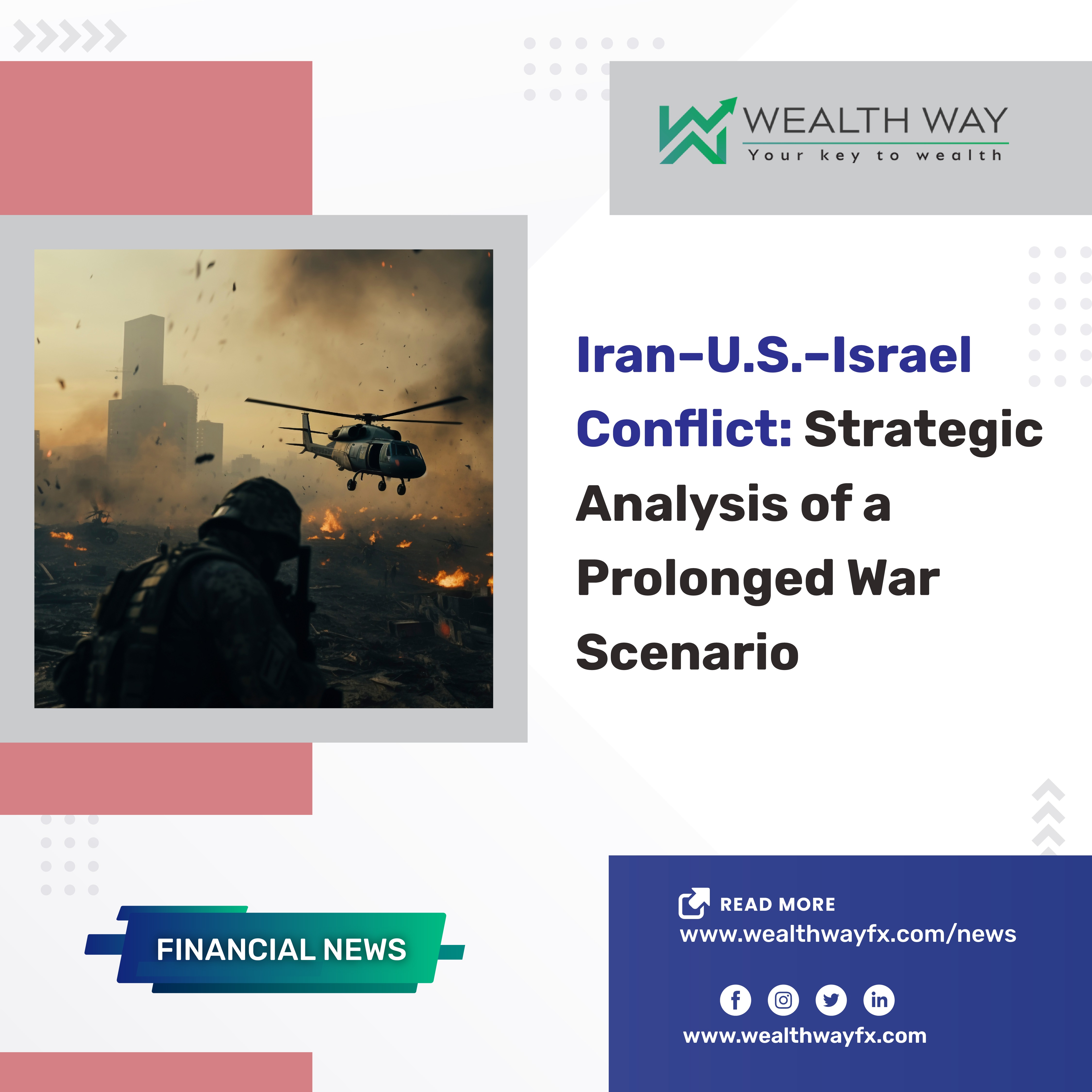
Iran–U.S.–Israel Conflict: Strategic Analysis of a Prolonged War Scenario
A prolonged conflict involving Iran, the United States, and Israel would represent a major escalation beyond proxy warfare which Iran always depended on eg. Houthis, Hezbolla, Rebel groups in Iraq, Hamas . While initial expectations in such scenarios often assume rapid dominance by technologically superior forces, modern conflicts increasingly show that asymmetric strategies can prolong wars significantly.
Tactical Challenges & Miscalculations by the U.S. and Israel
Even without confirmed large-scale losses of high-value assets, several strategic and operational challenges are widely recognized in such scenarios.
1. Underestimation of Asymmetric Warfare
● Iran’s doctrine is built around:
○ Swarm drones
○ Ballistic and cruise missiles
○ Proxy forces across the region which still not active fully except Hezbollah from Lebanon
● Traditional U.S./Israeli strengths (air superiority, precision strikes) are less effective against:
○ Dispersed targets
○ Mobile launch systems
○ Underground facilities
● Even before the conflict started there were many news outlets which stated US CENTCOM had cautioned the US administration multiple times in Jan 2026 regarding Iran’ retaliation tactics and vulnerability of US bases in the Middle East.
2. Overreliance on High-Value Assets
Modern Western militaries depend on:
● Advanced fighter jets eg. F35, F22, B2 Spirit bombers, these high volume assets have given air superiority easily but it failed to cripple offensive tactics of Iran.
● Large aerial refueling aircraft
● Fixed radar installations These are:
● Extremely capable and these high value assets have given air superiority easily but it failed to cripple offensive tactics of Iran.
● Even after achieving air superiority US faced losses like 4 F15 ex, 6 KC 135 refuelers.
● But also high-value, high-visibility targets, especially if it is not stealth, could be picked up by air defence radars.
Even limited damage or threat perception to such systems can:
● Disrupt operations
● Increase operational costs dramatically
3. Air Defense Saturation Problem
Systems like:
● THAAD
● Patriot systems
are designed for high-end threats, but:
● They can be overwhelmed by volume attacks - Iran learned this tactic from the 2025 conflict with Israel where they launched a barrage of Ballistic missiles to deplete the interceptors.
● Iran this time did even better by saturating air defence by using Shahed-136 destroyed THAAD AD radars at multiple sites, AN/FPS-132 radar etc.
● Interceptors are expensive (often $1M–$10M per missile) This creates a cost asymmetry problem.
4. US’ underestimation of Iran as a civilizational state
● Civilizational states like Iran, India, China etc have experiences of fighting war of attrition.
● Iran had an experience of fighting Iraq for eight years some decades ago which made their military doctrine to shape to fight long wars and not surrender.
● US largely depends upon shoot and scoot military tactics that is they mostly do surgical operations especially where air superiority can be easily be achieved. Even if the US do boots on the ground they collaborate with local soldiers to gain control of territory to do missions examples are Afghanistan and Iraq.
What Iran Has Done Better (Strategically)
Iran’s strength lies not in conventional superiority, but in asymmetric warfare efficiency.
1. Drone Warfare – The Shahed Strategy
The Shahed-136 is a key part of Iran’s doctrine.
Key characteristics
● Estimated cost: $20,000–$50,000 per unit
● Range: ~1,000–2,000 km
● Designed as a loitering munition (kamikaze drone)
Tactical advantages
● Mass deployment (swarm tactics)
● Not designed as a stealth platform but the shaping of Shahed-136 is done with the aim of delayed detection.
● Difficult to intercept in large numbers
● Forces defenders to use expensive interceptors
Strategic impact
● Even if interception rate is high (70–90%), cost imbalance remains
● Forces adversary to:
○ Deplete air defense stockpiles
○ Stay in constant defensive posture
2. Distributed Strike Capability
Iran relies heavily on:
● Mobile launch platforms eg. Shahed-136 uses truck mounted launching, while ballistic missiles are hidden underground only coupling is done above the ground.
● Ballistic missiles are hidden underground only coupling is done above the ground.
● Proxy-based attacks eg. Hezbollah fired 1500 rocket projectiles towards Iran.
This makes it:
● Difficult to neutralize strike capabilities completely
● Capable of sustaining long-duration conflict
3. Multi-Front Pressure
Iran’s regional strategy includes indirect pressure through:
● Allied groups in multiple regions ( still not active fully )
● Shifting the warzone to the middle east.
● Maritime disruption capabilities like the Strait of Hormuz
This creates:
● Operational overstretch for adversaries
● Constant pressure across multiple domains
Reality Check on Reported U.S. Losses
Claims such as destruction of (contested claims)
● 4 F-15 fighter jets
● THAAD AD radars
● KC-135 refueling aircraft
● Advanced radar systems like AN/FPS-132
are extremely significant events that would:
● Be globally reported and verified
● Trigger major geopolitical escalation
Current understanding
● No confirmed large-scale destruction of such systems in direct conflict
● However, vulnerabilities exist:
○ Fixed installations are targetable
○ Airbases within missile range are exposed
Economic Impact on the United States
Even without catastrophic losses, a prolonged conflict would have serious economic consequences.
1. Military Spending Surge
● U.S. defense budget already around $850–900 billion annually
● Sustained conflict could add:
○ Tens to hundreds of billions in operational costs
2. Cost Asymmetry Problem
● Intercepting cheap drones with expensive missiles:
○ $30K drone vs $1M+ interceptor
● Leads to:
○ Rapid depletion of high-cost inventory
○ Budget inefficiency
3. Oil Market Disruptions
If conflict impacts the Strait of Hormuz:
● ~20% of global oil supply flows through this route
● Oil prices could spike above $100–$120 per barrel
Impact on U.S.:
● Higher inflation
● Pressure on Federal Reserve policy
● Slower economic growth
Diplomatic Impact on the United States
1. Strained Alliances
● European allies may resist prolonged escalation
● Differences in:
○ Risk tolerance
○ Economic exposure to energy markets
2. Global South Alignment Shifts
Countries like:
● China
● India
may:
● Maintain neutrality
● Continue economic engagement with Iran
3. Credibility Risks
● Failure to achieve quick victory may:
○ Reduce perception of U.S. deterrence
○ US as the net security provider of middle east is already damaged.
○ Encourage adversaries to adopt similar asymmetric tactics
Conclusion
A prolonged Iran–U.S.–Israel conflict would highlight a critical shift in modern warfare:
● Technology superiority alone is no longer decisive
● Cost-efficient asymmetric strategies can neutralize advantages
Key takeaways
● Iran’s use of systems like Shahed-136 drones creates strong cost asymmetry
● U.S. and Israel face challenges in:
○ Sustaining air defense
○ Managing multi-front threats
● Economic and diplomatic costs may outweigh direct battlefield outcomes
US’s strategy of fighting a shoot and scoot have been unsuccessful this time because Iran was well prepared with the targets they wanted to hit in retaliation, as even when 47 IRGC military leadership was wiped out in the first strike, 31 local commanders stood with plan and they retaliated with impunity. Since US aims of this war seems unclear it becomes very tricky to conclude when this operation will be over. If their aim was regime change then this aim will be very difficult to achieve because either the US have to do boots on the ground or they want any armed group doing rebellion which doesn’t seem likely to happen.
 Iran–U.S.–Israel Conflict: Strategic Analysis of a Prolonged War Scenario
Mar 19, 2026
Iran–U.S.–Israel Conflict: Strategic Analysis of a Prolonged War Scenario
Mar 19, 2026
 U.S. Jobless Claims 4-Week Average Seen Easing Slightly in Early March
Mar 19, 2026
U.S. Jobless Claims 4-Week Average Seen Easing Slightly in Early March
Mar 19, 2026
 Euro Area Inflation Forecast Seen Rising to 2.0 Percent, Eurostat Data Suggested
Mar 18, 2026
Euro Area Inflation Forecast Seen Rising to 2.0 Percent, Eurostat Data Suggested
Mar 18, 2026
 US Pending Home Sales Expected to Show Modest Rebound in Latest Forecast
Mar 17, 2026
US Pending Home Sales Expected to Show Modest Rebound in Latest Forecast
Mar 17, 2026
 US Industrial Production Reportedly Rose 0.7 Pecent in January, Surpassing Expectations
Mar 16, 2026
US Industrial Production Reportedly Rose 0.7 Pecent in January, Surpassing Expectations
Mar 16, 2026
 Trade News Weekly Data
Mar 14, 2026
Trade News Weekly Data
Mar 14, 2026
 Core PCE Inflation Expected to Edge Higher to 0.3 Percent, Forecast Showed
Mar 13, 2026
Core PCE Inflation Expected to Edge Higher to 0.3 Percent, Forecast Showed
Mar 13, 2026
 US Initial Jobless Claims Came in Near 221K, Labor Market Signals Remained Mixed
Mar 12, 2026
US Initial Jobless Claims Came in Near 221K, Labor Market Signals Remained Mixed
Mar 12, 2026
 Core CPI Forecast Suggested Slight Uptick in Monthly Inflation
Mar 11, 2026
Core CPI Forecast Suggested Slight Uptick in Monthly Inflation
Mar 11, 2026